


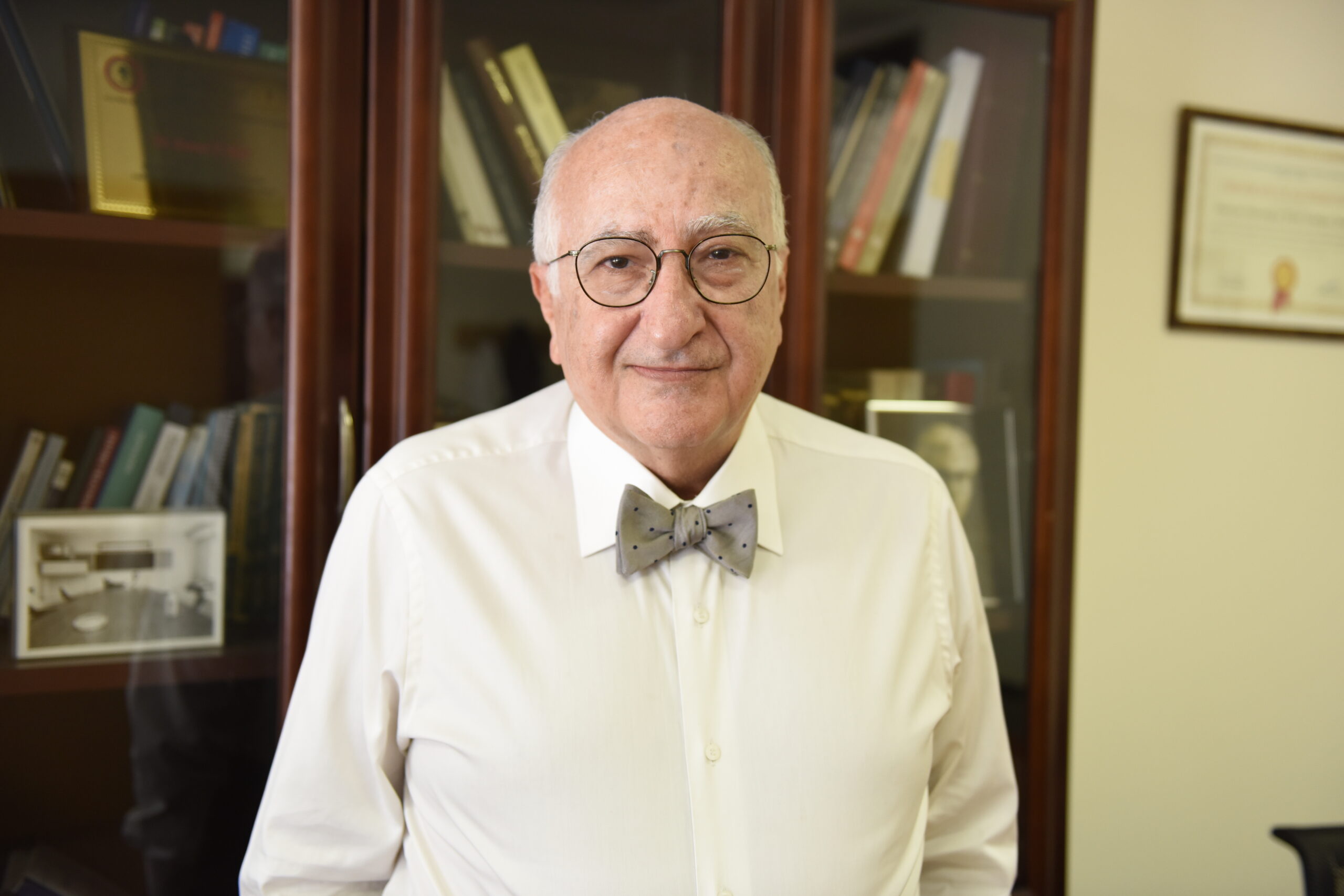
A conversation with Dr. Kamal Badr, Co-Founder of Teucer Diagnostics, the first U.S.-based biotech startup spun out of the American University of Beirut
ZM: You’re a nephrologist at the American University of Beirut. You’re also a scientist, who’s been doing research. How did you come across a biomarker that could help diagnose cardiovascular disease, and meet Teucer co-founder Assaad Eid.
KB: My career in medicine started as a researcher in nephrology and kidney disease in Boston back in the early 80s, after I had finished my training at AUB. The reason I went there is because of a particular question that had to do with kidney function, as it related to abnormalities in kidney structure, and the person who happened to be doing that was Barry Brenner, who had just been named the chair of nephrology at Harvard. So I went to him, and I trained with him. I spent the next 20-plus years in the United States, finishing off my training with Brenner, doing clinical training in kidney disease, then becoming a nephrologist researcher at Vanderbilt University and then at Emory University. During this time, my primary focus was on research into the various mechanisms of kidney disease, and beyond kidney disease into the areas of inflammation and injury in general. After I came back to AUB in 2000, I eventually started the Vascular Medicine Program, which was to find out why, in Lebanon, there is such a high rate and early onset of vascular disease: heart attacks, strokes, high blood pressure, diabetes, and it was through that program that I got introduced to Assaad Eid, who had also been recruited recently to AUB and was doing basic research in diabetes.
ZM: When did you have your eureka moment?
KB: I had this in 2009 when I was the founding dean of the School of Medicine at Lebanese American University, not doing anything related to kidney disease. But the reason I had it was because of extremely well-established facts: that albuminuria is a risk for cardiovascular disease, that podocytes prevent the filtration of albumin, that albumin gets reabsorbed after being filtered. Putting all these things together, it makes sense that the presence of albumin in the urine must be the result of injury to podocytes. And since albumin in the urine predicts cardiovascular disease, injury to podocytes should predict cardiovascular disease much earlier, because injury to podocytes occurs all the time, but albumin is filtered only after a certain amount of podocytes are injured. Still, even then, albumin gets reabsorbed, so it does not appear in the urine for another period of time. Therefore, the earliest point of detecting podocyte injury, which is equal in this case to endothelial injury–the cause of cardiovascular disease, is not to measure albumin and wait for deleterious consequences to occur, but to measure the cause of the filtration of albumin. And it so happens that these podocytes have proteins on them–such as podocin, which are unique to them. There’s no other cell in the body that has it. So if you can measure that protein in the urine, you can know for sure that this person is shedding podocytes. If they’re shedding podocytes, this means they’re having endothelial cells getting injured, and if they’re having endothelial cells getting injured, it means they’re beginning to have a process that eventually will lead to heart attacks and strokes. Except, you can find out about it years before their albumin goes up. Currently, there’s no test that tells you how your most important organ is doing.
ZM: Once you determined that your discovery was unique, what steps did you take to patent and spin out your discovery?
KB: When I got back to AUB, I told Assaad about it and he said: ‘well, I have this cohort of diabetics who have been followed for seven years, who have the micro albumins, etc., and we know their outcomes.’ So we took 100 of those who had no micro albuminuria (in other words, who would have been deemed to have no risk at their first visit), and of those we studied 50 who developed cardiovascular disease and 50 who didn’t over the next seven years. [We] went back to their original urine to see if the amount of podocytes in the urine could have distinguished them at the time when albumin could not, using quantitative PCR. And sure enough, we found that at the time when there was no other indication, those who had the highest amounts of podocytes were the ones who developed the earliest heart attacks and strokes. We then did a number of other follow-up studies, including with a database from Vermont that was part of the multi-ethnic study of atherosclerosis. When we got those initial results, we submitted a patent to AUB, and they prosecuted the patent with us over a period of five years, and we got a U.S. patent application approved. (It was granted in 2020.)
ZM: What are some of the challenges you faced to spin out the technology?
KB: I had the support of AUB in getting the patent prosecuted and in the idea of wanting to have the company. But, it was sometimes very difficult to conduct negotiations because their office had little experience with this kind of issue. For me personally, it was very bewildering and very unpleasant, because it was like going through fellowship again. I was in my late 60s, early 70s now, and I really didn’t want to do this again. I was talking to people using all these acronyms, and I had no idea what they meant—things like SAFEs, Series A, Series B. I had never really engaged in that kind of stuff, because I’m a physician and a scientist. My son Andrew helped me a lot; he found a very good friend, a lawyer at Cooley in New York. In terms of fundraising, we spoke to some venture capitalists, but they wanted to take the company over for almost nothing, and we didn’t want to do that. We got what was basically a small grant from a Lebanese benefactor just to keep things going, then eventually raised a seed round of $600,000, and after that raised another seed round of about $3 million, both as SAFE investments.
ZM: Why did you decide to establish Teucer in the U.S.? The answer might be predictable, but I’d like to hear it from you.
KB: I didn’t see anywhere else to establish. Europe? The notion never occurred to me. The company was established in 2020 in Baltimore, as a Delaware-based company. I was sitting in Baltimore then on sabbatical working with Dr. João Lima [at Johns Hopkins], and the epidemic hit and nothing was happening. We got the idea with Fadlo [Fadlo Khuri, AUB’s president], Assaad, and others to start a company around this. We eventually moved our presence to Miami, because the person who had been working with Assaad and had developed the assay in his lab, Rachel Njeim, had moved to Miami. They had an incubator there where we rented offices and planned to rent lab space to do the validation work. And now we are based in Omaha, working with the University of Nebraska Medical Center, which has terrific PCR validation laboratories and a team that was recommended to us by our scientific collaborators.
ZM: What are you most excited about at BIOLINK?
KB: BIOLINK is in an excellent position to bring people together (at AUB, LAU, and Saint-Joseph University). Lebanon is going to be facing competition from the region, so we better get our act together fast as a very powerful single unit.
This conversation has been edited and condensed for clarity.