


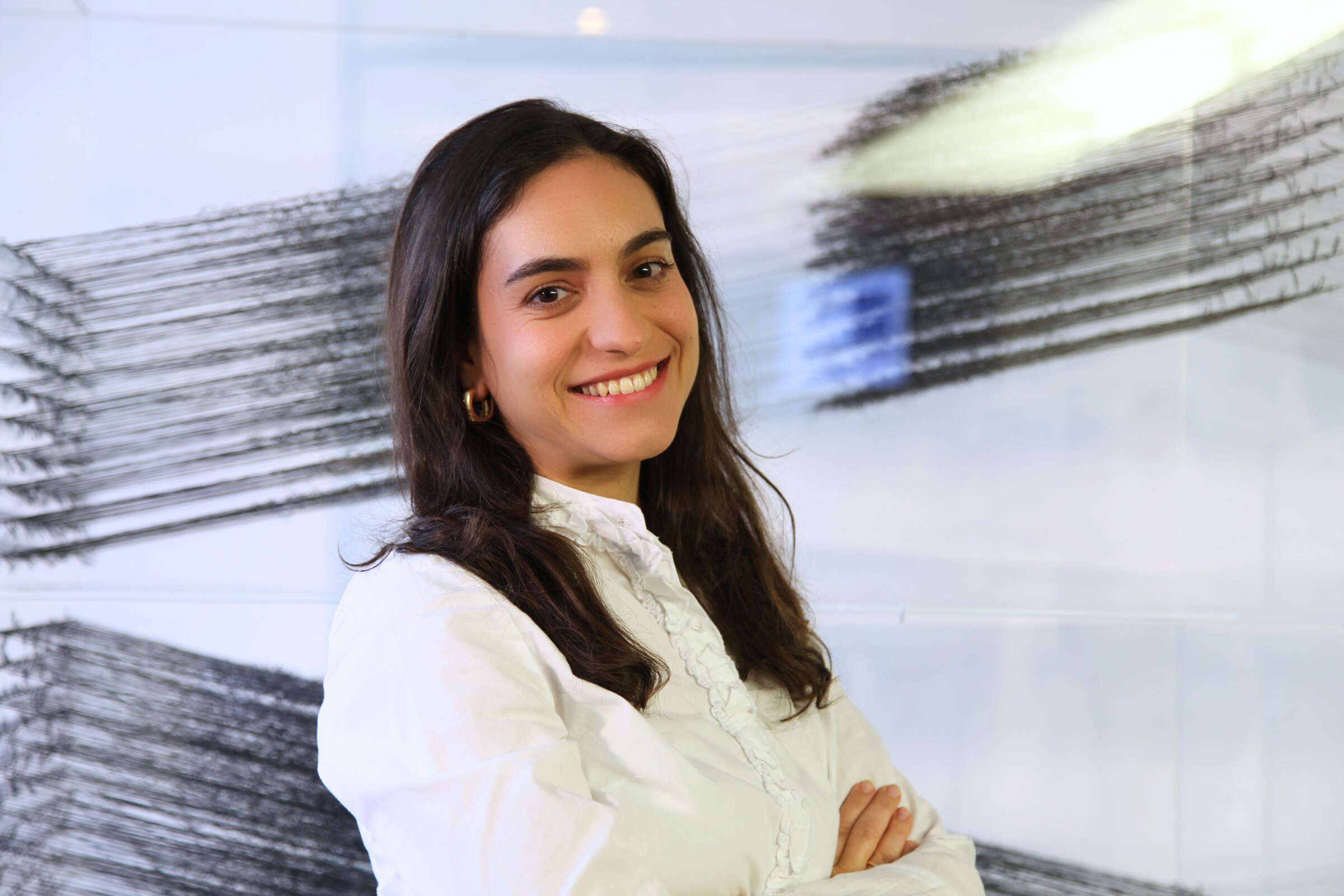
A conversation with Tatiana Monseur, Co-Founder, COO, and CFO of Polygon Therapeutics, a Paris-based biotech developing immunotherapies to treat cardiovascular diseases.
Your background is in consulting. What drew you to biotech and Polygon Therapeutics?
TM: I have a business school background and started in consulting at Bain & Company in the Paris office. In consulting, you are always pushed to think fast, to ramp up fast on plenty of subjects and industries, and it’s fun. But at the end of the day, I was asking myself: are these skills, this toolkit I’ve built, going in the right direction? Is my energy going toward the right topics? So after five years, I started thinking I wanted to work on a project with more impact, where I would also have more of a personal mark. At that time, I was thinking about joining an early-stage startup with a preference for the healthcare space (having worked on several pharma projects at Bain).
One of my sister’s friends, [Mohamed Abou Ali, Polygon CEO and co-founder], reached out to me and said: “your sister told me you’re considering leaving Bain to join an early-stage startup. I’ve been approached by my former professor who has been very successful in terms of publications, and now wants to take these discoveries to patients. I need someone to help me structure everything and raise money.”
I thought: this is a once-in-a-lifetime opportunity. I can be wrong, and that’s fine, but I can be right, and then it’s something I don’t want to miss. It’s precisely what I was looking for. I would be a co-founder, involved from the beginning, with everything to build. I was super excited by the idea of bringing my toolkit, my structure, my way of thinking, to a project that really mattered. That was more than five years ago.
Walk us through Polygon’s science. How does harnessing the immune system, a proven approach in oncology, translate to treating cardiovascular disease, and specifically atherosclerosis?
TM: Our science comes from Professor Hafid Ait-Oufella’s work. He has been working for the past 25 years on the very specific topic of cardio-immunology, the exploration of the dynamic interplay between the immune system and the cardiovascular system. It’s a topic that is quite new and quite untapped. We’ve been seeing some projects on cardio-immunology from big pharma over the past five years, so the momentum is growing. But back when the professor started diving into the subject, it was quite new and confined to academic research.
What he showed across multiple cardiovascular pathologies, with different immune targets, is that immunity has a role in both the development and the aggravation of cardiovascular diseases. That is super powerful, because today we always tend to look at cardiovascular disease from a metabolic perspective : do you have hypertension, high lipids, do you smoke? We never look at inflammation. And yet, even with all the treatments that exist and that are absolutely necessary, cardiovascular disease is still the number one cause of mortality in the world, meaning there are untapped mechanisms we need to address.
Let me take our latest program, PLG-105 as an example. It tackles atherosclerosis, the slow, chronic disease that builds up in the arteries for decades before it ever produces symptoms. Even when risk factors are managed, patients can still have heart attacks and strokes, and that residual risk is largely driven by chronic, low-grade inflammation in the artery wall. So with PLG-105, we want to slow the disease itself, at the chronic stage, long before any clinical event.
PLG-105 is a first-in-class human antibody that neutralizes a receptor expressed on myeloid cells–monocytes, macrophages, and neutrophils. Our target is a master amplifier: it takes the inflammatory signals coming from cholesterol stress and turns them up. What is powerful is that by blocking this single upstream node, you act simultaneously on multiple mechanisms that make plaque grow and unstable: the recruitment of immune cells, the production of inflammatory cytokines, the uptake of cholesterol that turns macrophages into foam cells, and oxidative stress. Most anti-inflammatory drugs in development target only a single mechanistic node.
The other piece is that PLG-105 has a companion biomarker. When our target is activated, a soluble form of it is released into the blood. In a prospective study of more than 9,000 apparently healthy patients followed for ten years, those with the highest levels of this soluble marker had a more than tenfold higher risk of a cardiovascular event. This is where patient selection comes in: the marker lets us identify, years in advance, the people who can benefit from the treatment.
Can you give us Polygon’s timeline for the development of PLG-105?
TM: PLG-105 is at the lead selection phase. We are past the proof of concept, working with the same fully human, animal-free discovery platform that delivered PLG-101, another asset in our portfolio focused on acute conditions, such as myocarditis. We plan to have optimized candidates ready for in vivo validation by the end of 2026, and we will then move into the IND-enabling package.
From there, roughly twenty-four months after we are funded, the goal is to file the IND and enter the clinic. So the main gating factor is funding. Scientifically, the path is clear.
Who are your investors, and are you currently looking to raise funds?
TM: Over five years, we have raised a mix of equity and non-dilutive funding. Most of the non-dilutive part has come from the many national competitions and grants we have won. At this stage, the equity is essentially held by angel investors, all European.
Yes, we are actively talking to investors, and also to pharma companies. Engaging pharma companies early matters, because in two or three years there could be an opportunity for a deal. In the meantime, these conversations help us understand what they are looking for, so we can align our development accordingly.
France has historically been seen as a challenging environment for biotech startups. What has your experience been, and what needs to change to make Europe more competitive?
TM: It’s difficult, and it’s challenging. France has very good, very strong science. But there are structural issues, both in France and in Europe.
First, liquidity. There is simply less capital here than in the U.S., while biotech is super capital intensive. Second, risk appetite. In the U.S., investors take risks, it’s considered part of the job. In France and Europe, people are more risk averse. For an early stage drug like ours, you are asking investors to believe in your science before you have clinical data. And third, the biotech industry is less mature here. We don’t have the same ecosystem of experts who can evaluate complex science the way you would find them in the Bay Area or Boston, where people understand the subtleties and can spot the opportunity.
We can find early-stage funding, but when it’s time for the large check to go clinical, there are very few actors able to write it. Usually, when you arrive at our stage, you need to build transatlantic syndicates: a strong French fund alongside a European one and a U.S. one. We really need an ecosystem that is more specialized in building biotech at scale, across every stage of drug development, and with a culture around risk. Because in biotech, if you don’t take the risk, nothing happens.
For more on PLG-105, check out Polygon’s press release: POLYGON_PressRelease_June2026_
This conversation has been edited and condensed for clarity.